POETS Day! Sir Philip Sidney Didn’t Get the Girl

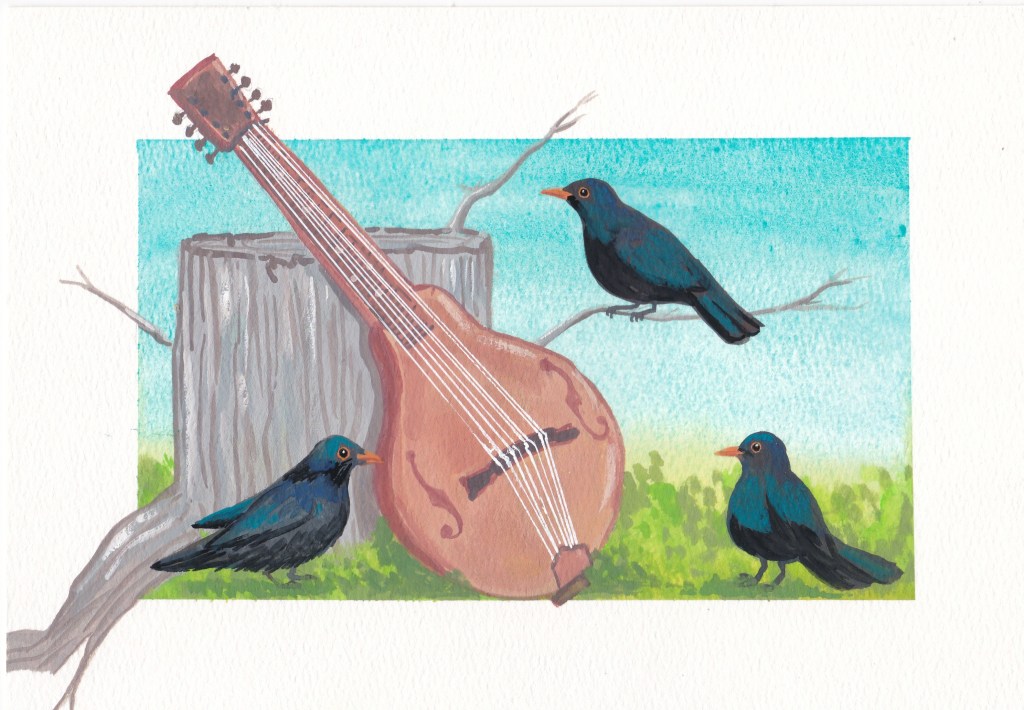
Illustration by Rene Sears

[This entry is cross posted at ordinary-times.com]

Welcome once again to POETS Day, where we usher in Henry Ford’s greatest creation – the weekend – a few hours ahead of schedule by embracing the ethos of the day: Piss Off Early, Tomorrow’s Saturday.

Life’s too short for work, and nobody’s gonna notice if you hoof it mid-afternoon.

***

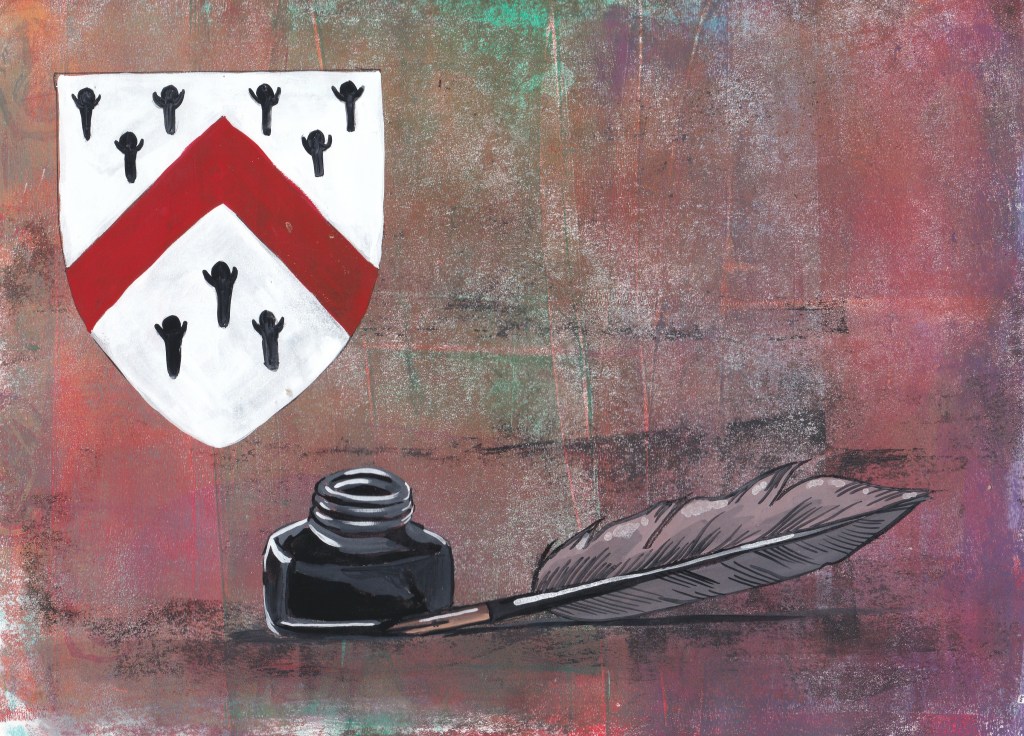
In a 1579 letter from Edmund Spenser to Gabriel Harvey, Spenser brings up an organization he’d been invited to join by “Master Sidney and Master Dyer.” The Masters were Sir Philip Sidney and Edward Dyer, a pair of Elizabethan courtiers who acted as agents and soldiers abroad for Her Majesty. Sidney, at least, would be shocked that he’s remembered as a poet rather than envoy or governor. The organization was called The Areopagus, and it’s fairer to call it the proposed organization as it’s not known whether it ever made it past planning. No meetings are recorded.

Sydney may have been inspired in conceiving his literary club by the Wilton Circle, a literary circle of which Spenser is confirmed to have been a member, founded and led by Philip’s sister Mary Sydney and run by Sir Walter Ralegh’s half brother (possibly Humphrey Gilbert, though I haven’t found a site willing to lift whomever out of Ralegh’s shadow with more than “half-brother.”) The Wilton Circle is described by the Shakespearean Authorship Trust as “the most important and influential literary circle in English history.” The Authorship Trust’s mission, depending on your disposition, is “just asking questions” regarding the authorship of plays ascribed to William Shakespeare, or they’re a bunch of conspiracy nuts on a snipe hunt. It’s also possible that Mary’s Wilton Circle postdated Sydney’s idea for the Areopagus. I can’t find minutes.

Continue reading

POETS Day! Poems from Wallace Stevens’s Harmonium

Illustration by Rene Sears

[This entry is cross posted at ordinary-times.com]

TGIF is POETS for those without initiative. Make it happen. Piss Off Early, Tomorrow’s Saturday.

First, a little verse.

***

Wallace Stevens started late. His first poetry collection held an impressive, by debut poetry collection standards, eighty five titles, but when the book, Harmonium, was published in 1923, its author was in his early forties. He’d had time to backlog.

I covered Stevens’s morning routine—composing in his head as he walked to his office at Hartford Accident and Indemnity Company—in this space three years ago. In Harmonium, he wrestles with how he should see the world. Should he be grounded in the rational or loose in the imagination? The question is posed piecemeal and never resolved.

I remember when Donna Tartt’s A Secret History came out. My mother’s kitchen table review was that it’s a great book, but she put all she’s ever learned and considered into it and she won’t have anything else to say for five to ten years. That was in 1992. Tartt’s second book came out in 2002. Stevens spends a great deal of energy trying to sort himself. He wrote sparingly through the 20s, not writing regularly again until 1933 and not publishing another bound volume until Ideas of Order in 1936. Harmonium received harsh reviews. Mark Van Doren dismissed him from the genre by writing in The Nation, per Wikipedia, that Stevens’ wit “is tentative, perverse, and superfine; and it will never be popular.” There were nice things written too, but the negatives weighed on him. Maybe he, like Tartt in Mom’s pinning, spent his store. Maybe the critics brushed him back. Maybe he had to reconcile vers libre with actuary tables.

Continue reading

POETS Day! The Present in TS Eliot’s “The Dry Salvages”

Illustration by Rene Sears of The Dry Salvages rock formation off the coast of Gloucester, Massachusetts where TS Eliot spent his boyhood summers.

[This entry is cross posted at ordinary-times.com]

Welcome once again to POETS Day, where we usher in Henry Ford’s greatest creation – the weekend – a few hours ahead of schedule by embracing the ethos of the day: Piss Off Early, Tomorrow’s Saturday.

Life’s too short for work, and nobody’s gonna notice if you hoof it mid-afternoon.

***

TS Eliot titled the third of his Four Quartets “The Dry Salvages” after a rock formation off the coast of Gloucester, Massachusetts, a fishing village and seaside retreat where the St. Louis based Eliot family spent their summers when the poet was a boy. Dry Salvages derives from an original French name for the formation transformed by time, mishearings, and local accent. Eliot tells us in a parenthetical preceding the poem, “presumably les trois sauvages,” Anglicized over time but, he instructs, “pronounced to rhyme with assuages,” so not as yet a fully English subject.

As with all of the Four Quartets, “The Dry Salvages” manages competing images presenting a theme. There’s a great deal going on and a great many ways to spend a thousand words on an aspect without touching on any number of other aspects. In this poem, the opening and recurrent image is that of water. The river is present, flowing, perceptible action. The sea is unknowable depths. Water rises from the sea, rains and forms oceans and back to the sea. The sea is the past and the future. We cannot know which or guess at more than the surface. The river is with us, changing in the moment. It is present. The idea permeates.

Continue reading

POETS Day! Ezra Pound’s Hugh Selwyn Mauberley

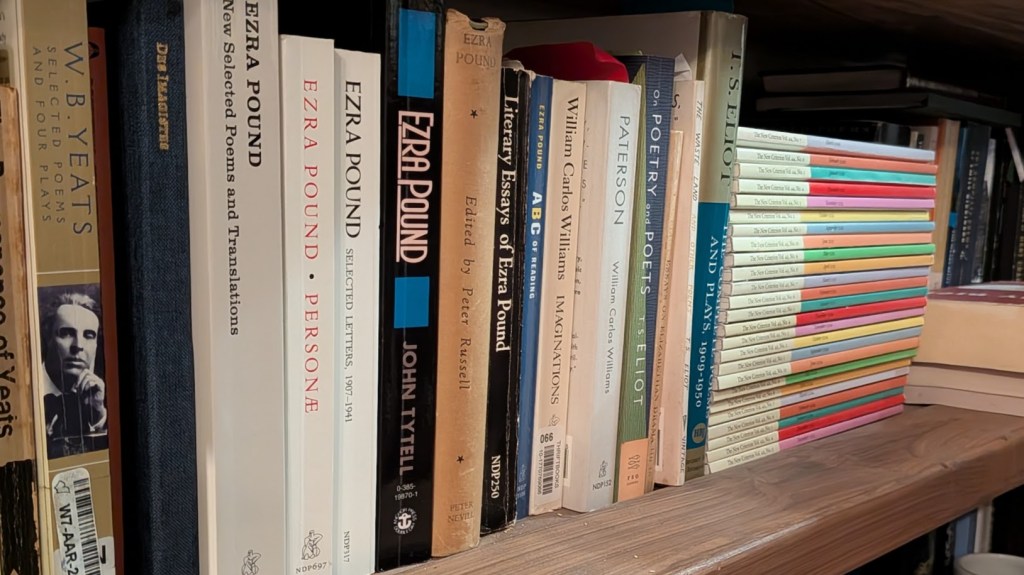
Photo by me.

[This entry is cross posted at ordinary-times.com]

The work week’s nearly finito; barely a few hours left. What are you doing? You’re not getting anything done between now and quitting time. Cut out and stop pretending. Piss Off Early, Tomorrow’s Saturday.

First, a little verse.

***

Ezra Pound was a very good poet but not a master versifier. I think he knew that. “Major Poet” is a term reserved for the greats who define their time and turn swaths of contemporaries into satellites. Yeats is a Major Poet, as is Eliot. “Minor Poet” sounds dismissive, though it’s not. Don’t mistake Minor for bad or run of the mill. Bad or run of the mill poets are called poets. A Minor Poet merits consideration enough have status conferred, to have demonstrated excellence if not tremendous influence.

In his essay “What Is Minor Poetry?,” Eliot picks out Robert Herrick, noting that he shows no “continuous conscientious purpose.” Herrick “is more the purely natural and un-self-conscious man, writing his poems as the fancy seizes him,” and it being Eliot writing, assumes we see and will make our own “gathering his rosebuds as he may” crack. Auden was more pragmatic, declaring that Major Poets have college courses devoted to their work and their work alone while Minor Poets do not. Auden would have made the rosebud joke.

Continue reading

POETS Day! Dorothy Wellesley

Illustration by Rene Sears

[This entry is cross posted at ordinary-times.com]

The work week’s nearly finito; barely a few hours left. What are you doing? You’re not getting anything done between now and quitting time. Cut out and stop pretending. Piss Off Early, Tomorrow’s Saturday.

First, a little verse.

***

from Fire
Dorothy Wellesley (1889-1956)

(‘Does not our life consist of the four elements?’
—Shakespeare)

The great stone hearth has gone.
An oblong electric tube is set in the wall
Like a cheap jewel.
Men converge no more to fire,
Men are on with the isolation:
The pride of science stands, and the final desolation.

No smoke, no danger, you tell me with veneration:
Much dies with the fire, young man,
More than one generation:
Man has known fire more than one generation.

That’s a tremendous opening. Yeats came across Dorothy Wellesley’s poetry in 1935 while putting together The Oxford Book of Modern Verse: 1892-1935 and had to meet her. According to Kieth Alldritt in his W.B. Yeats: The Man and the Milieu, the great poet was overcome: “My eyes filled with tears. I read in excitement that was more delightful because it showed that I had not lost my understanding of poetry.” Yeats further honored her with commentary in the Oxford Modern Verse introduction, writing “I knew nothing of her until a few months ago I read the opening passage in Horses, delighted by its changes in pace, abrupt assertion then a long sweeping line, by its vocabulary modern and precise.”

Continue reading

POETS Day! Apes in Hell

Illustrated by Rene Sears

[This entry is cross posted at ordinary-times.com]

The work week’s nearly done and you’re spending these last few hours doing what exactly? Trying to look busy? Surreptitiously scanning restaurant reviews? Checking game times? Texting your friends about restaurants and game times? Cut it out and cut out. Piss Off Early, Tomorrow’s Saturday.

First, a little verse.

***

I’ve mentioned before that I’m an introduction reader if the introduction is relatively short or obscenely long. My theory is that I might as well read a short one and that a long one indicates something in the book requiring the long introduction; something I might otherwise miss. My experience shows mid-length ones to be fumbling, fawning, and filled with ten dollar praise of the sort grad students fuss out over beloved former teachers. If I like the book, I’ll read those after. It’s a slapdash theory, but it’s served me and I’m fixed in my habits.

Christian Lorentzen wrote the Introduction to the NYRB Classic edition of Take a Girl Like You by Kingsley Amis, and I’m a little ticked off at him. He’s funny and drops some whispered-about biographical info, though he’s writing about Amis and the info is about infidelity so it was loud whispering to begin with, but entertaining. I’m not going to work out the chronology, but Harper’s claims Lorentzen as a contributor, as do the London Review of Books and others. This intro is a small sample size, but I’m content to dub him one of the good guys and read what I come upon in the future. Still, he ticked me off. I’m pretty sure he gave away the ending of the book.

Not so terribly that I won’t read. I’m pretty, not totally, sure he spoiled it. Lorentzen gives a who’s who of the characters, outlines the conflict central to the plot, and then tells us the ending is “genuinely shocking.” But given the build up as explained there’s only one genuinely shocking ending. If he’s pulled a feint and one of the mains out of nowhere joins the priesthood, reveals himself as the Lindbergh baby, grows a trunk: fine. The ending isn’t spoiled. But given where the story, by his touching on it tells, is going… Dammit.

Continue reading

POETS DAY! James Dickey

Illustration by Rene Sears

[This entry is cross posted at ordinary-times.com]

Officially, the work week’s nearly done; barely a few hours. What are you doing? You’re not getting anything done between now and then. Cut it out and stop pretending. Piss Off Early, Tomorrow’s Saturday.

First, a little verse.

***

My favorite librarian passed away. I didn’t seen him the last few times I was in, but I never divined his comings and goings well enough to know his days off. Poor health caught up to him. I don’t know what to say other than I’ll miss chatting with him. A few falls ago, I mentioned a Muriel Spark book I picked up. He recommended a few of hers he liked. They were the odd ones people didn’t talk about that often. His co-workers put up a memorial photo of him over a shelf filled with his recommendations. There’s a stack of printed sheets listing his “LOST Classics of the 20th Century,” for the interested, in the spirit of his Sparks recommendations: lesser-known books picked from respected but not bankable authors, for the most part. It’s an idiosyncratic list. That fits. Godspeed.

Last September, he and I were talking about the poets to come out of Vanderbilt University in the years surrounding World War II. He mentioned James Dickey. I knew Dickey was Poet Laureate back when they still called the office holder Consultant in Poetry to the Library of Congress, but I didn’t know much more beyond. We had to read Deliverance in 9th grade and as 9th graders, we watched the movie in addition and made 9th grade “Squeeeel like a pig!” jokes, but ignorance beyond that.

Continue reading

POETS Day! John Millington Synge

Illustration by Rene Sears

[This entry is cross posted at ordinary-times.com]

Officially, the work week’s gonna be over in a few hours. What are you doing? You’re not getting anything done between now and then. Cut it out and stop pretending. Piss Off Early, Tomorrow’s Saturday.

First, a little verse.

***

John Millington Synge is gross. Not really. At least not as far as I know. I was reading The Oxford Book of Modern Verse and got caught without a bookmark. J.M. Synge starts on page 144, so that was my little mnemonic: “John Millington Synge is gross.”

Synge was a great Irish playwright who wrote poetry, but very little of it. At least, he published very little of it. As best I can tell his sole collection is Poems and Translations. It contains twenty-two original poems, all short and mostly light and amusing. In addition are translations of poems by Petrarch and Villon, but they’re prose translations of the original author’s verse. I don’t find those terribly interesting.

The twenty-two seem more from a man who wanted to play with an amusing thought that channel a muse. Yeats was fastidious after perfection. Heaney feared frogs. Gogarty swashbuckled. Irish poets have great origin stories. Synge was wickedly clever and insightful, but I don’t get the sense he envisioned himself as a poetic force. That’s not to say he didn’t think big thoughts on the subject. There was a conservator about him.

Continue reading

POETS Day! Dickinson and Hopkins as a Control Group

Illustration by Rene Sears

[This entry is cross posted at ordinary-times.com]

The work week is gonna be over now, or it’s gonna be over in a few hours. What are you doing? You’re not getting anything done. Cut it out and stop pretending. Piss Off Early, Tomorrow’s Saturday.

First, a little verse.

***

I’m re-reading David Foster Wallace’s essay, “E Unibus Pluram.” If you aren’t familiar, he discusses the impact of television on his generation of fiction writers, as well as those subsequent. He makes the case that we’ve been roped into an irony trap – too post-modern for our own good – and served a side of warped empathy to boot.

The idea that we’re shaped by consumed drama has nagged at me. Frankly, I feel bludgeoned by it. The saddest scene I’ve seen on video is one lost to channel surfing. It was one of those true crime investigative documentary series. I can’t find or recall the name of the show where I saw the original, but plenty of similar scenes exist. A young woman’s mother was murdered. She’s giving her victim’s impact statement before a judge as part of the pre-sentencing procedure. This should be unprecedented in someone’s life. There should be no proper way of doing things. There should be no blueprint. But she has one.

Continue reading

POETS Day! Carl Sandburg

Illustration by Rene Sears

[This entry is cross posted at ordinary-times.com]

The work week is gonna be over now, or it’s gonna be over in a few hours. What are you doing? You’re not getting anything done. Cut it out and stop pretending. Piss Off Early, Tomorrow’s Saturday.

First, a little verse.

***

Carl Sandburg was posthumously honored with a postage stamp bearing a sketch of the poet done by his friend William A. Smith and the poet’s “distinctive autograph.” The “distinctive autograph” language comes from Wikipedia which appears to have gotten it from the world stamp authority, Scott Catalogue. Who doesn’t have a distinctive autograph? Signatures are supposed to be distinctive.

Before this week, I didn’t know much about Sandburg beyond a handful of poems I really liked and a handful I really didn’t. I knew he was a major figure in American letters, but didn’t realize the scope. In short, I was aware of his poetry and impact on that discipline, vaguely aware that he’d written Lincoln biographies, and think I’d heard somewhere that he helped preserve and widen the audience for American folk music. I didn’t realize how beloved he was in his time. Rather, I didn’t realize how large a figure he was in his time, because for all that he was beloved, he was scorned too.

Continue reading