
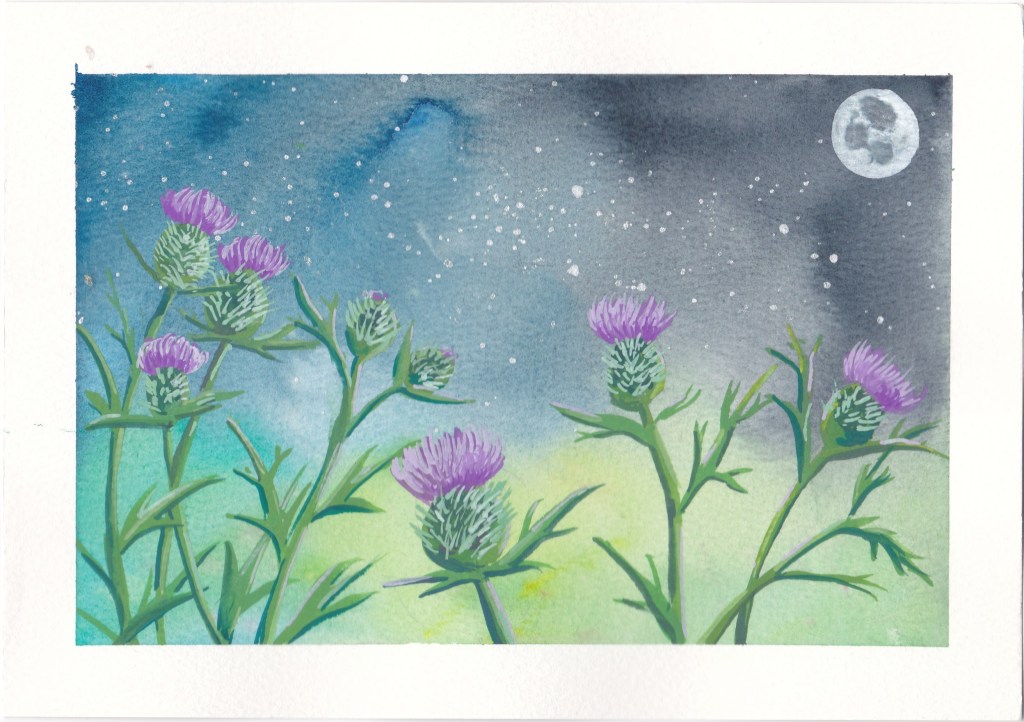
POETS Day! Hugh MacDiarmid Thistled While He Worked

Illustration by Rene Sears

[This entry is cross posted at ordinary-times.com]

I just got an email from my son’s college informing parents that our little darlings have to be out of the dorms by May, 9. That went quickly. Tempis fugitcarpe diem, “Life moves pretty fast. If you don’t stop and look around once in a while, you could miss it,” Piss Off Early, Tomorrow’s Saturday.

Honestly, that really snuck up on me. Freshman year: Almost down.

In the mean time, do that last one. Happy POETS Day.

First, a little verse.

***

I read about poets lives a good deal, and have decided that a lot of literary immortality is born from not having any idea what you’re doing on any front—politics, relationships, plain ole human decency—and making a ton of noise while you try to figure it out.

Not all, but many. Mild mannered insurance agent Wallace Stevens threw a punch at Hemingway. Pound blathered on about passports, clothing drives, new, new, new, and economic fantasy. The upright TS Eliot kept well within the rails when not tearing hundreds year old poetic tradition to pieces and filling the void with continuum-compliant fixes. He may have been the messiest of the lot. It’s seamless energy. Even in tubercular throes, KeatsDunbarPraed, and Lawrence produced poetry, sent out letters, remained exhibitionist observers. From one thing to another, promiscuous passions, stardom, hermitage; there is either a singularity of focus in the moment frequent to literary success or a conspiracy of biographers leading me to believe so. And the energy needs focus. One thing succeeds, fails, or finishes. What’s next?

Continue reading
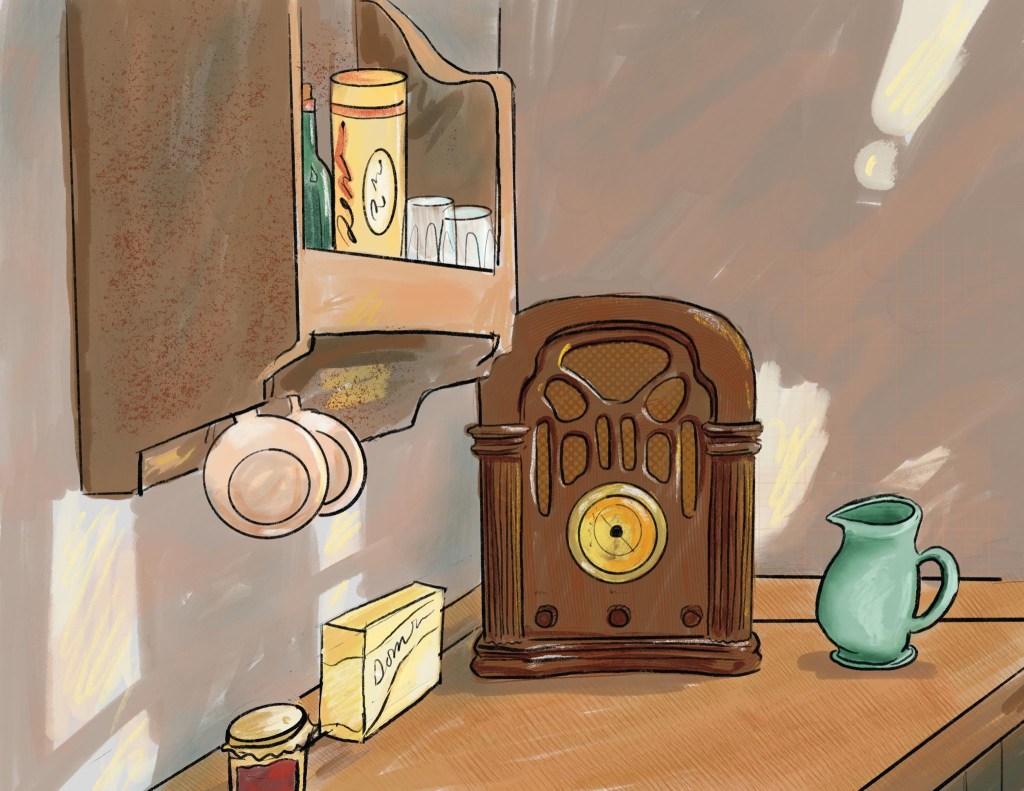
POETS Day! Edwin Muir’s “The Horses”

Illustrated by Rene Sears

[This entry is cross posted at ordinary-times.com]

Mississippi is where I pass on the right. Folks come from all round to make me pass them on the right in Mississippi. I saw tags from New York, and I passed them on the right in Mississippi. I saw tags from North Carolina driving 70 mph, and I passed them on the right in Mississippi. Someone driving in car with tags from neighboring Arkansas, seeing me pass him on the right in Mississippi, so loved being passed on the right in Mississippi that he let a whole train of fellow travelers dart past a slow truck in the right lane and pull up behind him before changing lanes to pass him on the right in Mississippi and then change lanes back again to pass a pick-up towing an empty trailer in the right lane some medium distance ahead. We all snaked.

I will never understand Mississippi. I read a Joan Didion novel in Louisiana. It was very good.

It’s POETS Day so Piss Off Early, Tomorrow’s Saturday. Get out of work mid afternoon. Live life in the fast lane (but actually drive fast.)

First, a little verse.

***

Edwin Muir published the piece of literary criticism, Scott and Scotland, in 1938. In it he argues if Scotland is to have a national literature, they must do away with far and wide dialects and decide on a common language.

“If Shakespeare had written in the dialect of Warwickshire, Spenser in Cockney, Ralegh in the broad Western English speech which he used, the future of English literature must have been very different, for it would have lacked a common language where all the thoughts and feelings of the English people could come together, add lustre to one another, and serve as a standard for one another.”

Glasgow sneered incomprehensibly, Edinburgh twanged nasally, and Aberdeen wore fuzzy boots.* The one language common to them all through radio, newspaper, and all the missives of empire, was English. He put it that Scots survived in nursery rhymes and “anonymous folk-song.” The old language as men lived in his time “expresses therefore only a fragment of the Scottish mind.” He made the case that the Scots, who already spoke English, needed to proceed in English in their literature. This made him very unpopular with Hugh MacDiarmid (M’Diarmid), whose “Lallan” movement, “Lallan” being a Scots pronunciation of “Lowlands,” was beating the curtains for kilts and cursing. Muir had no patience for nationalism.

Continue reading