
[This entry is cross posted at ordinary-times.com]
Smoking looks cool. The converse is true as well. Not smoking is awkward. P.J. O’Rourke wrote, “People who don’t smoke have a terrible time finding something polite to do with their lips.” I’d say the same about their hands. Few have the Italian gift for gesturing. If there’s a desk level piece of furniture, maybe a chair back, leaning takes care of one hand. The other? I don’t know. Roll the Chapstick in your pocket? A lot of the cool people died so we bought gum and got snippy with waiters for a while. Now we’re awkward and have, on average, ten more years to kill.
In 1955, roughly 57% of American adults smoked. That number is just over 11% now. Over the course of seventy years, we have reduced the smoking share of the population by 46% points. “Non-smoking” offices became all the rage somwhere in the 80s. Everyday, 57% of the smoking workforce stepped out for a ten minute commiseration with other smokers. How many times? Twice? Three times a day? The Industrial Revolution. The Computer Revolution. New methods of management. We’ve heard myriad ways we’ve increased worker productivity but over seven back-loaded decades more than half the workforce stops taking thirty minutes a day off and we hear nothing. Something’s not right.
They don’t notice. Half of it’s make-work anyway. Piss Off Early, Tomorrow’s Saturday. Start Friday afternoon a few hours before they tell you it’s okay. They really don’t notice.
First, a little verse.
***
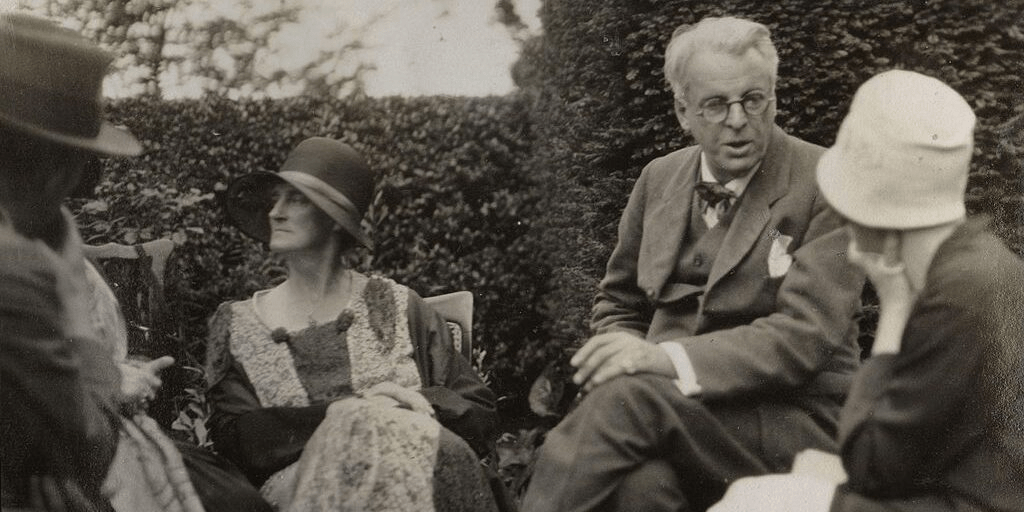
“When Lionel Johnson and Katharine Tynan (as she was then), and I, myself, began to reform Irish poetry, we thought to keep unbroken the thread running up to Grattan which John O’Leary had put into our hands, though it might be our business to explore new paths of the labyrinth. We sought to make a more subtle rhythm, a more organic form, than that of the older Irish poets who wrote in English, but always to remember certain ardent ideas and high attitudes of mind which were the nation itself, to our belief, so far as a nation can be summarised in the intellect.”
– W.B. Yeats “Poetry and Tradition”
Yeats and Lionel Johnson were contemporary members of the Rhymers Club when Irish mythology and history was the talk, an association Yeats credited with deepening his interest and devotion to his home and its people. The two collaborated on Poetry and Ireland: Essays by W.B. Yeats and Lionel Johnson in 1908. It seems the two were friends, but it may have been that they shared a fascination and drive to preserve a vein from the literary past and develop its admiration that it would infuse future works.
Continue reading



 The Columbo Game