POETS Day! From Henley to Plath

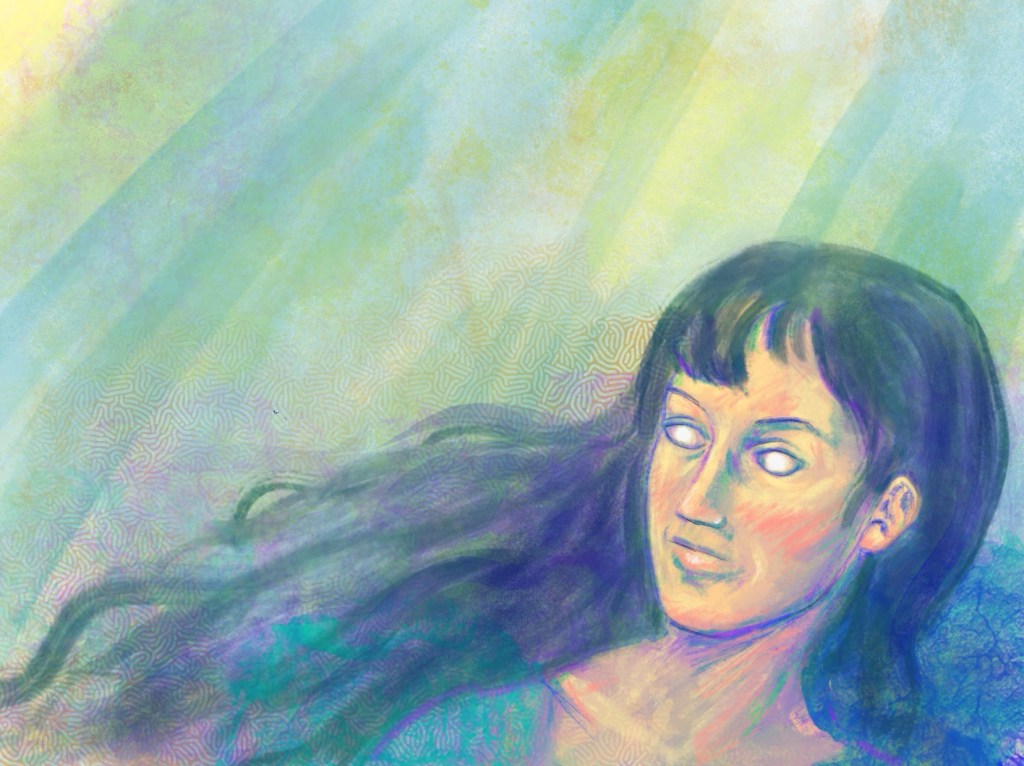
Illustration by Rene Sears

[This entry is cross posted at ordinary-times.com]

I go on for a bit below so I’ll keep this part short.

College football starts this Week! Whatever files need filing or rivets need riveting, leave them be. They’ll sit til Monday. It’s POETS Day! Piss Off Early, Tomorrow’s Saturday.

There’s Auburn to route against Friday night and hated Tennessee against a Syracuse team I don’t think I’ve ever met anyone with opinions on playing Saturday morning, both looking across the line as if in a mirror and thinking “They look like idiots in those orange uniforms.”

Then there are proper teams playing.

– Alabama @ Florida State – Saturday 2:30 CT on ABC

– LSU @ Clemson – Saturday 6:30 CT on ABC

– Tons of other less compelling but long awaited games bracketed between Boise State @ South Florida at 4:30 CT on Thursday on ESPN and Utah @ UCLA at 10:00 CT on Saturday.

If you’re reading this on Friday and were unaware, you’ve missed the Thursday slate but there’s plenty left to see if you have gumption. Get pissing off early. There are games need watching.

We made it through the desert. First, a little verse.

***

This Side of Paradise by Fitzgerald is my favorite of the genre, but there’s also Portrait of the Artist as a Young Man by Joyce or Pere Goriot by Balzac if you’re in a Contenental mood. There are plenty, a whole grip, to borrow an elastic phrase a chef friend is fond of, of semi-autobiographical first novels written by young writers with more desire than experience, so they run their hero though naivete-shedding travails and leave him wiser and poised to conquer. It’s been forever since I’ve read any of them so they’ve all gotten mushed together in my mind but at least one of them ends with the author stand-in character in a cemetery shouting a version of “Look out world. Here I come!” That’s the synecdochic scene for me.

Continue reading

POETS Day! Moments in The Weary Blues by Langston Hughes

[This entry is cross posted at ordinary-times.com]

The purpose of POETS Day is to follow the acronym and Piss Off Early, Tomorrow’s Saturday. Get out of work mid Friday afternoon, read a little poetry and enjoy life. Free time is always better when it’s illicitly gotten. Towards that end, in the past I’ve encouraged untruths and subterfuge, recommended apps that show incoming hospital calls on your caller ID, invented religious exemptions, and advised on recruiting co-conspirators.

I recently picked up a copy of The Simple Sabotage Field Manual, billed as “a World War II-era document created by the United States Office of Strategic Services (OSS) to provide guidance to resistance groups on how to disrupt enemy operation through covert means.”

There’s a lot in it about slowing down deliberative processes; recommending committees, enthusiastically suggesting an idea be fully explored into oblivion, and otherwise crippling organizations by inviting bureaucratic involvement. There are instructions for stopping up toilets too. I confess to being less than wowed by most of the entries. I expected it to be more like The Dangerous Book for Boys but with Tatiana Romanova in tow.

Continue reading

POETS Day! The Poetry of Ninth Grade English, Revisited

[This entry is cross posted at ordinary-times.com]

I was in a used bookstore downtown, earlier today. It’s a ramshackle place with books and old magazines stacked on warped piles of records and rolled up blueprints and “Mardi Gras 1977” posters leaning against assumed tables; probably enough kitschy crap to deck out a whole reinvigorated warehouse district worth of lesbian coffee houses.  The poetry section shines. Either the owner’s tastes or the resale temperament does a commendable job filtering out new age gibberish and incongruent anthologies plus he shelves criticism with the criticized. I picked up a book of T.S. Eliot essays on Elizabethan drama. Last time I found a collection of poets’ views on Yeats. Five bucks, both.

While I was perusing the poetry a young woman, attractively in her mid-twenties or so, came in and struck up a conversation with the owner. She was in town for business, she said, doing a three-day project that only took two. She didn’t know anybody in town. Could he suggest anything? Sights? A place for lunch?

The only other person in the shop was a young guy, roughly her age, perusing local history and thumbing through old magazines. I knew he heard. The place was too small not to have. I’m old and happily married. The owner, older still. I don’t know local history guy’s story. I don’t know any of attractive work tourist’s story beyond what I’ve shared either, but what I had always considered a laughable cliché – a used bookstore hook up – was not unfolding before me despite the stage being improbably set. Local history didn’t so much as look over his shoulder.

Continue reading

POETS Day: Crow, by Ted Hughes

[This entry is cross posted at ordinary-times.com]

The NFL season is over. College (real) football is self-immolating, buying and transferring talent as teams vie for one of the fitty-leven shiny new slots or the inevitable newer ones in the regular season diffusing expansion of the playoffs. Half the teams in the NBA make their playoffs, so there’s no point in watching that feigned drama. College basketball was visionary. They shed non-March interest long ago, and even that doesn’t kick in until post Ides. European soccer is in stasis. The beginning of the season is exciting. The cutthroat ending is exciting. What happens now won’t matter for a while.

Thank God for baseball. Spring training is here, consequence free but heraldic. I put on the Dodgers at the Padres yesterday. Didn’t even watch it. Just background. Baseball’s magic that way. It’s a comforting presence in an uncertain world. Today, I think I’ll put on KC v Texas. The big prize is tomorrow: Red Sox at Orioles. I’ll have a hard time not watching that.

Piss Off Early, Tomorrow’s Saturday. Skip out of work a few hours ahead of schedule and ignore a ball game. First pitch at 2:05 Central. Happy POETS Day.

***

You’d think the most interesting thing about one of Great Britain’s Poet Laureates would be his poetry, but Ted Hughes first wife killed herself. She turned on an unlit oven and passed. At the time of her suicide, Hughes had moved out and was living with another woman. He would continue living with the other woman until six years later when she too killed herself; also by turning on an unlit oven.

Continue reading

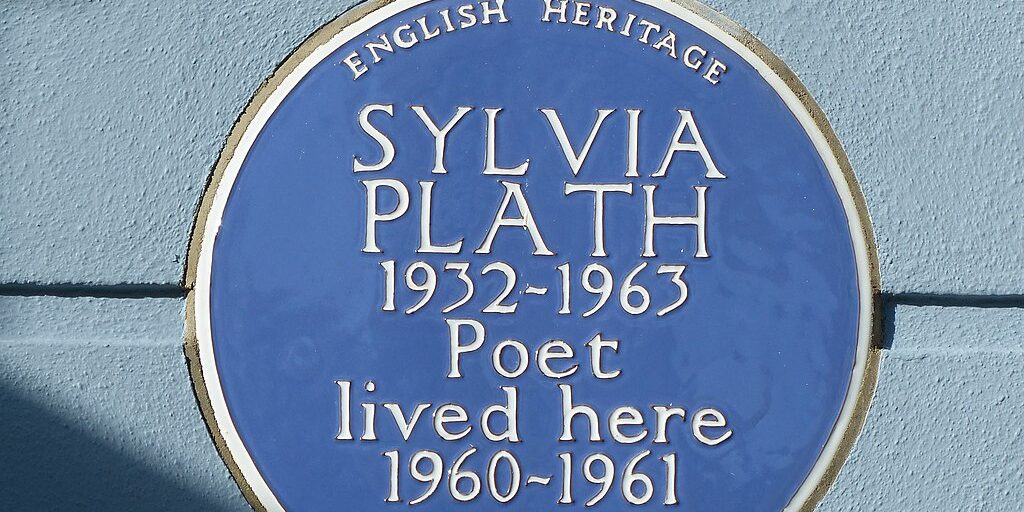
Notes from Reading Sylvia Plath for POETS Day

The Unexpectedness of the poppies
their gratuitous beauty in
her own frozen life
               – Unknown Annotator

I checked out Sylvia Plath’s collections The Colossus and other poems and Ariel from The Emmet O’Neal Library in Mountain Brook, Alabama a week or so ago. Rather, I checked out Sylvia Plath’s collections The Colossus and other poems and Ariel from O’Neal Library, formerly The Emmet O’Neal Library until Emmet’s views on segregation that no one knew or knows about were dug up and found to be too embarrassing to city council public relations people but not so embarrassing that the O’Neal family’s, gracious benefactors it seems, name suffer as well, in Mountain Brook, Alabama a week or so ago. Someone got to Ariel before I did. Actually, lots of people got to Ariel before I did. At least I assume so. The earliest stamped date in the book, copyrighted 1966, appears to be May 7, 1987. A lot of people likely signed their name from the card that used to be in the check out sleave adhered to the last page. It’s all computerized now, of course, so the card is no more. Some library books still have them and I like to see how many people read the book, or at least took it home, before me. Not Ariel. The card is gone. I know at least one person checked it out though, because she wrote all over the place. That’s the someone I’m focusing on, because that someone went from being a someone to being someone.

Continue reading

POETS Day! Sylvia Plath

Photo by Megalit, CC BY-SA 4.0 , via Wikimedia Commons

[This entry is cross posted at ordinary-times.com]

Welcome to POET’S Day of the second week in Ordinary Time. Today we try to make anguish take wing, be a light for those in the land of gloom, and bring abundant joy by encouraging you to usher in the weekend a few hours early. Why wait until Friday evening when a slight bending of the truth can get you out of work in the middle of the afternoon? It’s POET’S Day by God’s sake. Piss Off Early, Tomorrow’s Saturday. Dissemble, obfuscate, and gleefully trespass the norms that preserve our hopefully durable civilization, but be as pious about it as you can this time. Be humble and thankful at this opportunity to escape the sultry bonds of employment you’ve been given. Use the time wisely. Marvel at natures grandeur in a local park. Join in fellowship at a local watering hole before happy hour even has a chance to kick off. You deserve it. No matter how you end up spending your gotten free time (remember, stealing hours from work are only “ill gotten” if you fake being sick) maybe take a moment to enjoy a little verse.

***

This week’s POET’S Day poet is Sylvia Plath which makes banishing anguish, bringing light and abundant joy a thing of the weekend activity rather than the poem. Sorry about the bait and switch. I won’t go into her background because I want to do something different this time and break this week’s featured poem down stanza by stanza. Plath was mentally ill. She described her manic depression in a 1958 journal “It is as if my life were magically run by two electric currents: joyous positive and despairing negative—whichever is running at the moment dominates my life, floods it.” In January of 1963 she told her doctor that she had been deeply depressed for six or seven months. In February of that year she put her head in a gas oven and died of carbon monoxide poisoning.

In the months before her death she wrote poems that would be posthumously collected along with a few of her previously published but uncollected works and titled Ariel, released in 1965. In the introduction, poet Robert Lowell wrote that these were composed at a furious pace, “often rushed out at the rate of two or three a day.” She and Lowell were among those known as “The Confessional Poets” with Elizabeth Bishop and John Berryman among others. None of them were fond of the moniker. In The Wounded Surgeon, Adam Kirsch writes that “Plath scorned the notion of poetry as ‘some kind of therapeutic public purge or excretion.’” Not that it mattered. They all were heavily autobiographical. In Ariel Plath writes of her past suicide attempts, resentments towards her father and husband, and carbon monoxide poisoning should there be any doubts that her suicide wasn’t considered long before it’s execution.

Continue reading