POETS Day! Elizabeth Bishop

At The Fishhouses painted by Elizabeth Bishop

[This entry is cross posted at ordinary-times.com]

It’s POETS Day once more, that welcome weekly wonder when we wrap ourselves in awed gratitude, warmed by thoughts of Henry Ford, visionary businessman, architect of the modern, and inventor of the weekend. Is it ingratitude towards Henry’s memory to want just a little bit more free time? Sure, the weekend is wonderful as he made it, but we all know that nothing really gets done those last few hours before the sanctioned release. People check out mentally before they clock out officially and since you’re not getting any actual work done there’s no reason for you to be there. Who’s it going to hurt if you leave at three instead of five or six? Two? Piss Off Early, Tomorrow’s Saturday. Dissemble, obfuscate, fudge the truth, and gleefully trespass the norms and delicate pieties that preserve our hopefully durable civilization. It’s okay. If you didn’t do everything in your power to get out of that prison you draw a paycheck from you’d be a participant in the lie that you are going to do anything of value for the company in those Friday afternoon workish twighlight hours and lying is bad. If you think about it, being there and not working is kinda like stealing. Get out. Hit a bar and catch a mid-major basketball game at happy hour prices, stroll through the zoo and make faces at the lions, call your mom. When was the last time you called your mom? The weekend begins when you say it does, assuming your boss falls for whatever shenanigans you get up to in service of your premature but deserved escape. Do with it as you will, but in homage to the mighty acronym may I suggest setting aside a moment for a little verse? It’s a particularly good way to pass time waiting on friends who may not run as roughshod over the delicate pieties and were not as successful as you were in engineering an early exit.

***

Today’s featured poem is “The Map” by Elizabeth Bishop. Bishop is yet another poet who rankled mid-last-century at being included among those known as The Confessional Poets. It seems like they all objected to the name to various degrees claiming that poetic personae was separate from the poet’s and further claiming, often laughably, that obviously autobiographical narratives were some sort of ill-defined coincidence, but Bishop seems to have a point in her objection. I’ve seen her referred to as loosely associated with the Confessionals and even wrongly held up as one of them. She lost her father before she could know him. He died when she was eight months old. Her mother was institutionalized due to mental illness when she was five, and as a defacto orphan, she spent some of her childhood in Nova Scotia with her maternal grandparents, moved to Massachusetts to live with her paternal grandparents, and later to another part of Massachusetts to live with her mother’s sister and her family. An inheritance from her father left her well off. She travelled widely, moved around the U.S., and spent fifteen years in Brazil. Her homosexuality was an open secret. All of that made it into her writing at least obliquely, but who doesn’t reference their life at all? I should mention that I’ve read about twenty of her poems, of which she published only one hundred and one titles, but none of her prose, which I’ve read is more biographical than her verse. I’m not claiming to be an authority on her body of work, but from what I’ve read and what I’ve read about what I haven’t, she’s no exhibitionist and no more “confessional” than most widely-read poets of her time. She doesn’t seem to air her life out there for all to see. Certainly not enough to be grouped with John Berryman or Sylvia Plath.

She does invite you into her mind, though. It’s intimate.

Continue reading
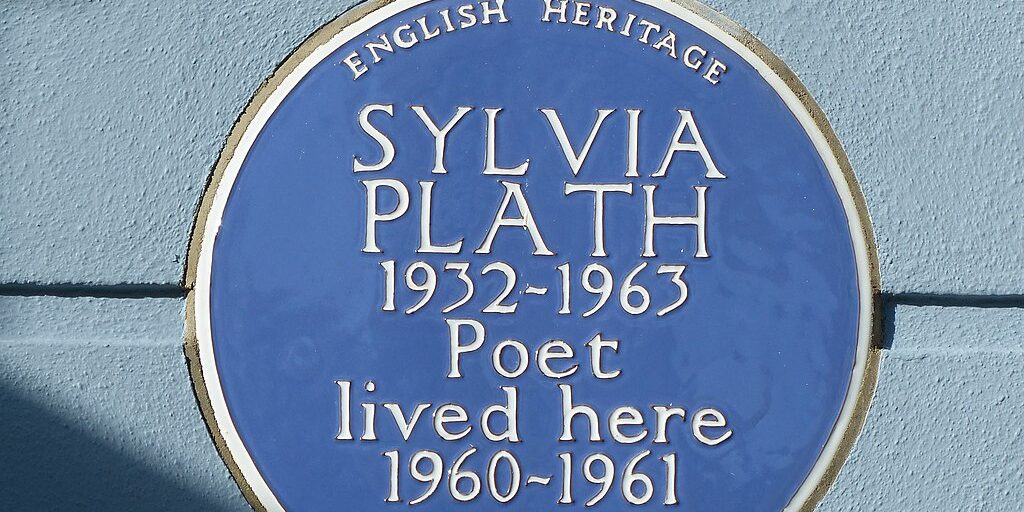
Notes from Reading Sylvia Plath for POETS Day

The Unexpectedness of the poppies
their gratuitous beauty in
her own frozen life
               – Unknown Annotator

I checked out Sylvia Plath’s collections The Colossus and other poems and Ariel from The Emmet O’Neal Library in Mountain Brook, Alabama a week or so ago. Rather, I checked out Sylvia Plath’s collections The Colossus and other poems and Ariel from O’Neal Library, formerly The Emmet O’Neal Library until Emmet’s views on segregation that no one knew or knows about were dug up and found to be too embarrassing to city council public relations people but not so embarrassing that the O’Neal family’s, gracious benefactors it seems, name suffer as well, in Mountain Brook, Alabama a week or so ago. Someone got to Ariel before I did. Actually, lots of people got to Ariel before I did. At least I assume so. The earliest stamped date in the book, copyrighted 1966, appears to be May 7, 1987. A lot of people likely signed their name from the card that used to be in the check out sleave adhered to the last page. It’s all computerized now, of course, so the card is no more. Some library books still have them and I like to see how many people read the book, or at least took it home, before me. Not Ariel. The card is gone. I know at least one person checked it out though, because she wrote all over the place. That’s the someone I’m focusing on, because that someone went from being a someone to being someone.

Continue reading

POETS Day! Sylvia Plath

Photo by Megalit, CC BY-SA 4.0 , via Wikimedia Commons

[This entry is cross posted at ordinary-times.com]

Welcome to POET’S Day of the second week in Ordinary Time. Today we try to make anguish take wing, be a light for those in the land of gloom, and bring abundant joy by encouraging you to usher in the weekend a few hours early. Why wait until Friday evening when a slight bending of the truth can get you out of work in the middle of the afternoon? It’s POET’S Day by God’s sake. Piss Off Early, Tomorrow’s Saturday. Dissemble, obfuscate, and gleefully trespass the norms that preserve our hopefully durable civilization, but be as pious about it as you can this time. Be humble and thankful at this opportunity to escape the sultry bonds of employment you’ve been given. Use the time wisely. Marvel at natures grandeur in a local park. Join in fellowship at a local watering hole before happy hour even has a chance to kick off. You deserve it. No matter how you end up spending your gotten free time (remember, stealing hours from work are only “ill gotten” if you fake being sick) maybe take a moment to enjoy a little verse.

***

This week’s POET’S Day poet is Sylvia Plath which makes banishing anguish, bringing light and abundant joy a thing of the weekend activity rather than the poem. Sorry about the bait and switch. I won’t go into her background because I want to do something different this time and break this week’s featured poem down stanza by stanza. Plath was mentally ill. She described her manic depression in a 1958 journal “It is as if my life were magically run by two electric currents: joyous positive and despairing negative—whichever is running at the moment dominates my life, floods it.” In January of 1963 she told her doctor that she had been deeply depressed for six or seven months. In February of that year she put her head in a gas oven and died of carbon monoxide poisoning.

In the months before her death she wrote poems that would be posthumously collected along with a few of her previously published but uncollected works and titled Ariel, released in 1965. In the introduction, poet Robert Lowell wrote that these were composed at a furious pace, “often rushed out at the rate of two or three a day.” She and Lowell were among those known as “The Confessional Poets” with Elizabeth Bishop and John Berryman among others. None of them were fond of the moniker. In The Wounded Surgeon, Adam Kirsch writes that “Plath scorned the notion of poetry as ‘some kind of therapeutic public purge or excretion.’” Not that it mattered. They all were heavily autobiographical. In Ariel Plath writes of her past suicide attempts, resentments towards her father and husband, and carbon monoxide poisoning should there be any doubts that her suicide wasn’t considered long before it’s execution.

Continue reading

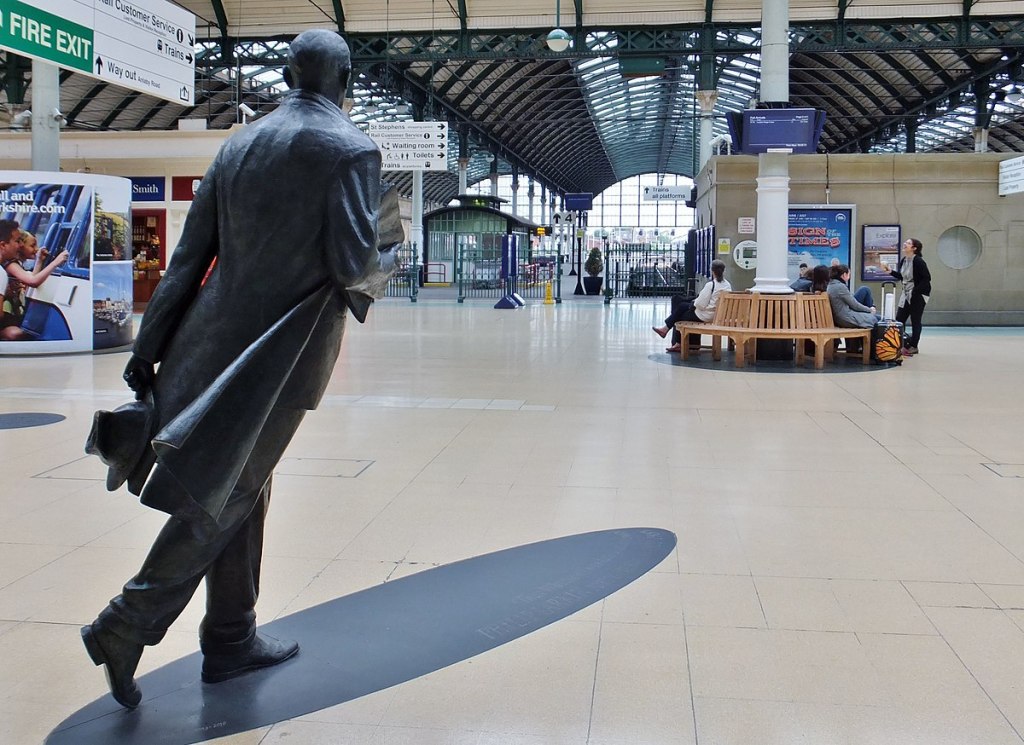
POETS Day! Philip Larkin

The copyright on this image is owned by Bernard Sharp Edit this at Structured Data on Commons and is licensed for reuse under the Creative Commons Attribution-ShareAlike 2.0 license.

The copyright on this image is owned by Bernard Sharp and is licensed for reuse under the Creative Commons Attribution-ShareAlike 2.0 license.

[Ed. Note: This piece was originally posted at ordinary-times.com on 9/16/22 which was, in fact, a Friday. You can look it up.]

Happy P.O.E.T.S. Day! It’s been over a month since I posted one of these. Sorry, but life interrupts its own course sometimes. Unexplained absence due to a slack work ethic, galivanting across the countryside, or fitful bouts of Netflix bingeing aside, it’s that day again, so let’s let bygone days be bygone days and embrace the ethos of the moment to Piss off Early, Tomorrow’s Saturday, and having left work behind begin the weekend early with zeal and vigor and all sorts of other things we might feel when we find ourselves freed prematurely from the surly bonds of work.

I came across this week’s poet after doing one of my occasional listings of books that I feel like I should have read at some point in my life but never got around to. From my most recent reckoning I picked out Kingsley Amis’ Lucky Jim. Everything I knew about it should have beckoned me earlier. The book is supposed to be hilarious and nasty (in the cruel rather that the Debbie Does Dallas sense.) I love hilarious and nasty (both senses.)

I started it last night and can attest to the nastiness. It’s like a sardonic P.G. Wodehouse tired of an “Oh Gosh!” Bertie Wooster trying to avoid an accidental engagement to be married and recreated him as Jim Dixon, a social climbing would-be lecher, given the right number of bitters, and let him loose on the unsuspecting English gentry. Imagine Wooster as Michael Knight and Jim as Garthe. I’ve only read the first eighty pages so that’s all I can attest to though I can only imagine he’ll get worse as I read on.

Continue reading

POETS Day! Vladimir Nabokov

Vladimir Nabokov

Vladimir Nabokov Photo by Henry Kellner, CC BY-SA 4.0 , via Wikimedia Commons

[This entry is cross posted at ordinary-times.com]

It’s POETS Day! Piss Off Early, Tomorrow’s Saturday… yay…

Look. I’m trying to be enthused about sneaking out of work and starting the weekend early, but the college football season is done. Party’s Over, Endure The Sabbatical feels a better fit. August 26 is a long way off and I’m full of existential questions. “Are you really a Saturday if no one misses a holding call?” “How are you not just a secular Sunday?” Justify yourself, Saturday.

I guess all the non-football related fun stuff is still out there and once the pain of loss ebbs I’ll pick up and remember that weekends are still worth living for and shift hours are still damned tools of the oppressor but right now my heart just isn’t in it. Sure, you could dissemble, obfuscate, fudge the truth, and gleefully trespass the norms and delicate pieties that preserve our hopefully durable civilization as per usual, but why? There’s no college football methadone out there. The rules are still the same though let’s face it. We’re just going through the motions here. All means are a-okay in service of the urge to prematurely escape the bonds of employment and settle in at a friendly neighborhood joint a few hours before even happy hour begins, lay comfortably in the grass at a local park, go for a swim, or God forbid, go for a light jog. It’s your weekend, I guess. I’ll need a bit to mourn and acclimate. Thankfully, there’s still verse to pass the time.

Continue reading

POETS Day! The John Milton Edition

[Ed. Note: This piece was originally posted at ordinary-times.com on 11/5/21 which was, in fact, a Friday. You can look it up.]

Congratulations lads and lassies; despite the drudgery of the work week you’ve made it to Friday and the weekend is in sight. But we are not watchers, you and I. We are not mere witnesses to the unfolding of our destinies. We do not wait for the weekend. We seize it. It’s time for a P.O.E.T.S. Day – Piss Off Early, Tomorrow’s Saturday.

So fake a cough, “twist your ankle,” or just slip out of the office quietly. No one will think the less of you for a lie or minor property destruction in the cause of sidling up to a bar a few hours early.

This week’s get-out-of-work-early gambit requires a smart phone and a roughly eleven megabyte app download. I have a Pixel so I download from Google Play but I’m willing to bet there is an iPhone-compatible app in the iStore.

Continue reading

POETS Day! Edna St. Vincent Millay

[This entry is cross posted at ordinary-times.com]

Happy New Year and welcome to the first POETS Day of 2023. It’s not a prime numbered year, but that’s okay. If every year were prime we wouldn’t look forward to them the way we do. I don’t know what new challenges and joys may arise this trip around the sun but I do know that old challenges have a habit of carrying over. Work still takes time away from better uses and you still feel the loss of time most acutely as the miniscule bit of it that is yours to use freely approaches. The weekend is coming. Stop waiting. Piss Off Early, Tomorrow’s Saturday. Dissemble, obfuscate, fudge the truth, and gleefully trespass the norms and delicate pieties that preserve our hopefully durable civilization. Nearly all means are justified by the urge to prematurely escape the bonds of employment and settle in at a friendly neighborhood joint a few hours before even happy hour begins, find a park bench and a guitar and busk, put on your two-tone shoes and play the ponies, or God forbid, go for a light jog. It’s your weekend. Do with it as you will, but in homage to the mighty acronym may I suggest setting aside a moment for a little verse? It’s a particularly good way to pass time waiting on friends who may not run as roughshod over the delicate pieties and were not as successful as you were in engineering an early exit.

I knew little to nothing of Edna St. Vincent Millay until the beginning of this week. I’ve come across her work before and read a few poems here and there, but she was a name on a long list of names I resigned to never find the time to get to know as much as I wished. Her name came up in reference to a crossword puzzle. The clue was “Poet _____ Wylie” and I had “EL_NOR” but if I was right about the across word the name would be “ELINOR.” I’d never seen it spelled that way so I checked Google. There she was. Elinor Wylie. I downloaded one of Wylie’s collections and while some was really good most was structurally impressive with little content or vice versa. It was a small sampling and she was well though of during her time so I’m not passing judgement yet, but I did notice that among those who admired her was Millay, several volumes of who’s work a quick search showed was available at the library down the road. I checked her out.

Continue reading

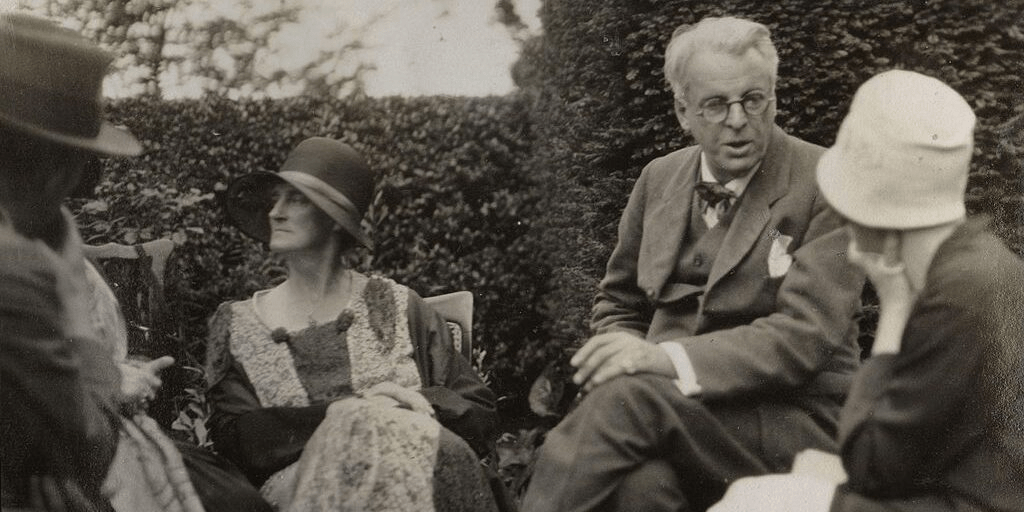
POETS Day! It’s Yeats Again!

[This entry is cross posted at ordinary-times.com]

I miss the old millennials. The new ones keep checking their phones and when you ask them to clean up the mess they made spilling soup in a rarely used hallway in the restaurant where you both work they say “Okay,” and when you find the mess still there the next day and ask why they didn’t clean up the mess like they said they would, they say “I couldn’t find a mop,” and when you ask why they didn’t ask someone where a mop was they say “I didn’t know who would know,” and then check their phones.

The old millennials were much more engaging, going on and on about the end times. They went a bit far. That’s true for the whole species no matter what eschaton-immanentizing catalyst they choose to promote, and promote they do. There’s no “’I don’t have my ‘Zorp is Nigh!’ sandwich board on because I couldn’t find a paint brush,” from these millennials. They get out in the world and let it know it’s on the clock. Here’s my question: Where did they go?

Continue reading

POETS Day! Clement Clarke Moore

[This entry is cross posted at ordinary-times.com]

“Not a mouse stirring.”
– 
Hamlet Act I, Scene I

This is another one of those weekends where there’s really not much need for a POETS Day. Heresy! You might say, and I’d be tempted to agree with you, but even those that don’t celebrate Christmas are the beneficiaries of an act of Congress marking the 25th of December as a federal holiday and that designation pretty well spills over to the days before and after in practice if not in fact. Even if you are at work, whoever you are supposed to be calling on or transferring funds to is probably tilting at last minute shopping or stuck in an airport because the U.S. is now apparently Hoth so it’s a wasted week. If you don’t work retail, you’ve likely already been given a pass to leave work early on Friday if you were expected to show up at all. There’s no need to adhere to the dictate Piss Off Early, Tomorrow’s Saturday, but that doesn’t mean there’s no need for a bit of poetry. On the contrary, this is an excellent time to get all doe-eyed and the kind of overplayed optimistic cheerful that makes grown men cringe and wish they’d never heard the word ebullient and say, “But it’s always time for poetry!” I think that’s true. Hope you do too.

To my knowledge, there is no tradition recommending anapests when writing poetic religious narratives, but that’s where I keep coming across them. To my knowledge, they are rarely used in devotionals or similarly themed works (I say rarely because I’m holding out that just because I can’t think of a single one, there are more things in heaven and earth than I come across reading the slice of English language poetry that I prefer.) The anapest, a metric foot consisting of two unstressed followed by one stressed syllable, pops up in a lot of long form works. The Illiad, the Odyssey, and the Aeneid were all written primarily using another three-syllable foot known as a dactyl, made up of a stressed followed by two unstressed syllables. The distance between stresses in either foot gives prominence the stress wouldn’t have in an iamb or trochee (two syllable feet, unstressed/stressed and stressed/unstressed respectively) and can contribute to an epic sensibility. Translations into English keep as close to the original possible. “I sing of arms and the man” is an example of keeping with the dactylic spirit if not the precise form. Stresses fall on “arms” and “man” but to make sense a throw away “I” is included. In addition to throw away syllables often anapest might be substituted for a dactyl in translation so you can know in your heart of hearts that Juvenal’s Satires are considered to be written in dactyls but can come across an essay or analysis that says they are anapestic without it ruining your world view.

Continue reading

POETS Day! Mark Van Doren

[This entry is cross posted at ordinary-times.com]

POETS Day has arrived and it couldn’t have come at a more auspicious moment. About this time desperation for that final gift is settling in and you’re looking at videos and news reports of Black Friday melees and realizing that not only are those people done with Christmas shopping but their wounds have likely healed. It may be that the receiving end of a WalMart stomping pays peace of mind dividends. At the very least you could rely on mall related PTSD as an excuse to get you out of work early and jumpstart the… well…

Maybe jumpstarting the weekend isn’t for you this this time around. It’s still POETS Day and you still have to all that dissembling, obfuscating, truth fudging, and gleeful trespassing of societal norms and all the delicate pieties that preserve our hopefully durable civilization, but this time you are doing it for reasons other than increasing your opportunities for pleasure so it’s kinda selfless. No happy hours, no grassy parks to lay in, no pond swimming or light masochistic jogging. You have to get out of work so go ahead and Piss Off Early, Tomorrow’s Saturday. The problem is that this POETS Day you’re gobbling up extra me time to shop for others, and that’s the worst kind of shopping there is.

Continue reading