[This entry is cross posted at ordinary-times.com]
People who read a lot mispronounce words. There are a lot more opportunities to read obscurities than to hear them said. Rather than be embarrassed at the mangling, they should be proud at knowing how to use a word they’ve never heard. They’ve expanded beyond the town square. That’s good. But people still get embarrassed.
To help, there are thousands of ten- to fifteen-second YouTube videos titled something along the lines of “How to Say Qatar” or “How to Pronounce Siobhan.” Handy stuff.
The other day I was reading and came across synecdoche, which isn’t tossed around at the lunch counter all that often. I’ve been all over that word for years, throwing stress forward and backward. I finally went to YouTube’s “How to Pronounce Synecdoche” and it made me so happy. You have to go listen.
Piss Off Early, Tomorrow’s Saturday. Don’t waste a Friday afternoon working. Go do that. Put something funny somewhere to catch people unaware. Be an acid free merry prankster. Synecdoche.
First, some verse.
***
Paterson is William Carlos Williams’s great work. He initially planned four books, added a fifth, and died with a sixth in the works. The poem is set in Paterson, New Jersey, with a one-third-dropped Nicene conception of Paterson as man and city, separate and inseparable depending on book or stanza, as the protagonist.
Most towns were not founded by Alexander Hamilton. Paterson comports with the majority, but Hamilton envisioned the city as an industrial center with the falls as its early engine and encouraged its growth into such. Hamilton got D.C. designer Peter L’Enfant involved and though there was some disagreement causing L’Enfant’s departure, his plan to harness the river’s power was implemented. Immigrants followed, more so than to most of the rest of the country: Germans, a bunch of English, Scots, and many, many Irish.
The Passaic River flows through the town, in whose midst lies Paterson Great Falls State Park, green for a block or so spreading from each bank. The Passaic Falls strikes just east of where Wayne Avenue and Maple Street intersect, if Google Maps is true. Assuming I’ve read properly, the settlement began below the falls and spread south, east, and west before eventually engulfing the wilderness to the north. Williams presents a beautiful image of water drawn from disparate sources in that wilderness, mixing violently, but running towards something common. Past eddies, shore lapping, with impediment rocks washed away long ago, right before the falls every drop is of a singular energy.
Continue reading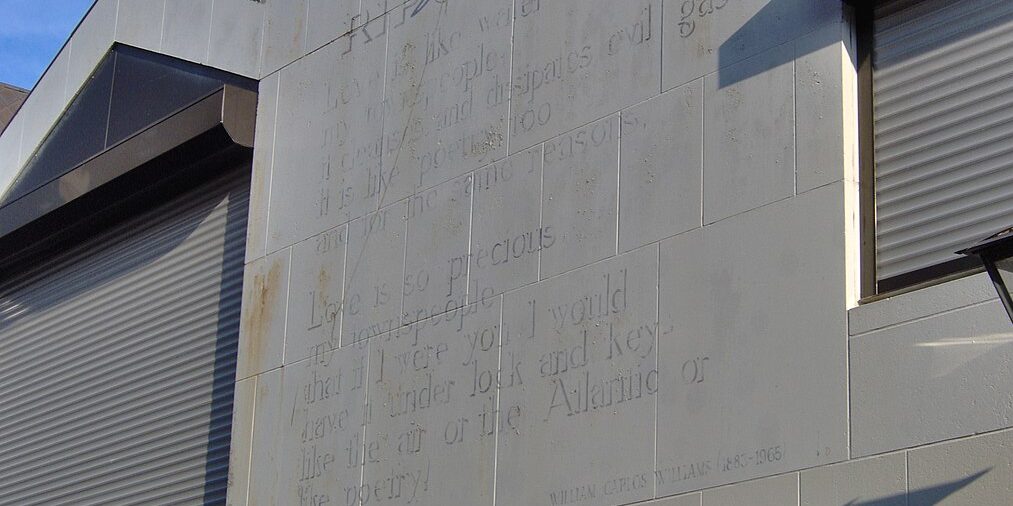
 The Columbo Game